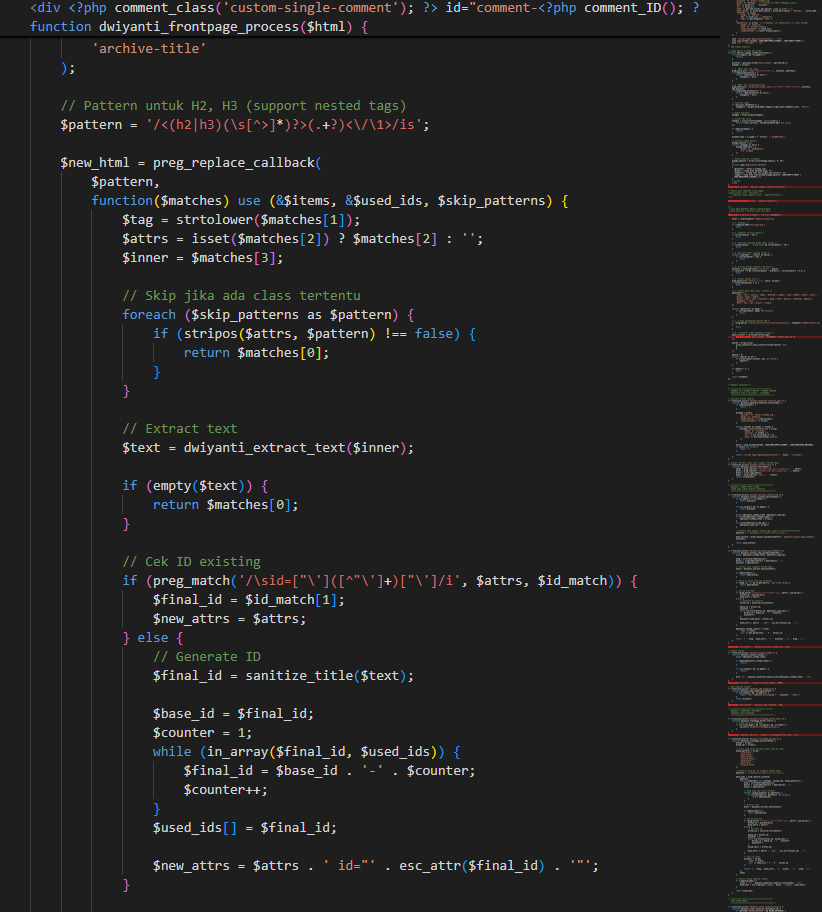
Technical SEO that works
at the code level
Site Architecture & Crawl Path
I design URL structures and internal linking systems that allow search engines to crawl and prioritize your most important pages efficiently.
Schema Markup Implementation
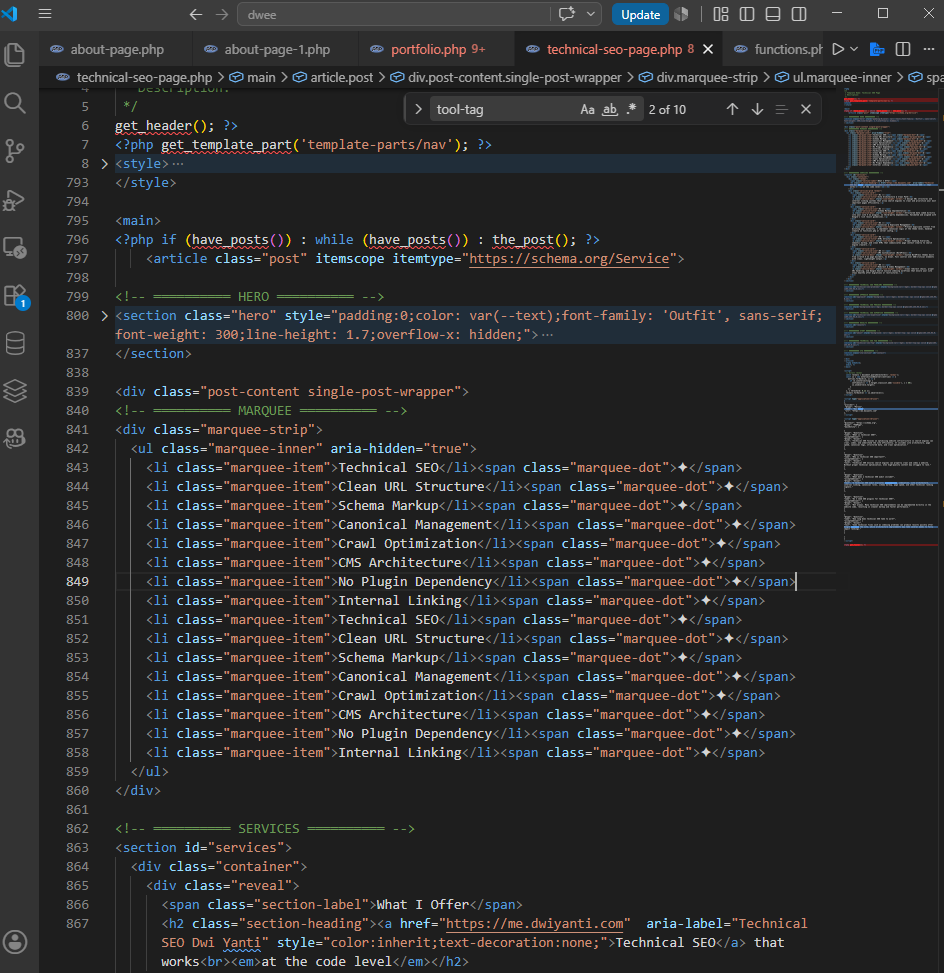
Structured data coded directly into your site — no plugins, no third-party dependencies. Validated and aligned with Google’s rich result guidelines.
Canonical & Duplicate Management
Prevent duplicate content from diluting your authority. I implement canonical logic at the theme level, handled cleanly in functions.php or server config.
HTML Structure Optimization
Proper heading hierarchy, semantic markup, and clean HTML that communicates page context clearly to search engine crawlers.
CMS Customization (WordPress)
Custom WordPress themes built from scratch — no page builders, no bloat. Full control over SEO-critical elements with clean, lightweight output.
Redirect & Index Management
Clean redirect chains, proper 301 handling, and Google Search Console indexing workflows that ensure your site stays healthy after migrations or restructures.
Common technical SEO issues
that prevent websites from ranking
Many websites struggle to rank not because of poor content, but because search engines cannot crawl, interpret, or index the site properly. My SEO strategy identifies and fixes these issues directly in the codebase.
Indexing Failures
Pages stuck in “Discovered – currently not indexed”, sitemap conflicts, or robots directives blocking Google.
Broken Internal Linking
Weak internal linking structures that prevent search engines from discovering important pages.
Duplicate Content
Improper canonical configuration causing Google to ignore primary pages.
Crawl Budget Waste
Parameter URLs, archive pages, and duplicate paths that waste crawl budget.
Slow Rendering
Heavy themes and plugin stacks that slow down crawling and reduce Core Web Vitals performance.
Invalid Schema Markup
Structured data errors preventing eligibility for rich results.
No plugins.
Just clean code.
Most SEO consultants layer plugin on top of plugin. I work differently — understanding how search engines actually interpret your website, then solving problems directly at the source code. My full SEO strategy covers every layer of visibility.
My background in HTML, CSS, and CMS management means I don’t need to wait for a developer. As a professional SEO specialist, I diagnose and fix technical SEO issues myself, faster and more precisely.
add_action( ‘wp_head’, function() {
if ( is_singular() ) {
$canonical = get_permalink();
echo ‘<link rel=”canonical” href=”‘
. esc_url( $canonical ) . ‘”>’;
}
});
Audit First, Always
Every engagement starts with a full technical audit — crawl data, index coverage, canonical issues, schema validation, redirect chains.
Fix at the Root
Issues are resolved in the theme, template, or server config — not patched with plugins that create new dependencies.
Experiment & Validate
I’ve tested SEO strategies across Blogger, WordPress, and custom HTML sites. What I implement is proven through real experiments, not theory.
Measure & Iterate
Using Google Search Console, Analytics, Ahrefs, Semrush, and schema validators to monitor every change and optimize continuously.
How I improve
technical SEO performance
1. Technical SEO Audit
Full crawl analysis using Search Console, log analysis, and crawling tools to identify indexing issues and technical errors.
2. Architecture Optimization
Restructuring URL hierarchy, internal linking systems, and taxonomy structure for optimal crawl paths.
3. Code-Level Fixes
Canonical rules, schema markup, HTML semantics, and indexation signals implemented directly in the codebase.
4. Crawl & Index Monitoring
Continuous monitoring through Google Search Console and analytics tools to validate improvements.
5. SEO Experiments
Real-world testing across Blogger, WordPress, and custom-coded websites to validate strategies.
6. Continuous Optimization
Technical SEO improvements refined over time based on crawl behavior and ranking data.
Core areas of technical SEO
I work on regularly
Technical SEO is not just about fixing errors. It involves designing websites that search engines can crawl, understand, and trust. Below are key technical areas I focus on when improving website performance.
Technical SEO Audit
Complete technical analysis to identify crawl issues, indexing problems, broken canonical rules, and structural weaknesses affecting search visibility.
Crawl Optimization
Improving crawl efficiency through internal linking structure, sitemap configuration, robots directives, and elimination of crawl traps.
Indexation Management
Ensuring important pages are indexed while duplicate or low-value pages are properly controlled using canonical tags and meta directives.
Website Architecture
Designing logical URL structures and internal linking systems that allow search engines to easily discover and prioritize important pages.
Structured Data
Implementation of schema markup to help search engines understand entities, improve rich result eligibility, and enhance search visibility.
Core Web Vitals
Optimizing loading performance, rendering speed, and user experience signals that influence modern search rankings.
Sites that rank.
Rooms that fill.
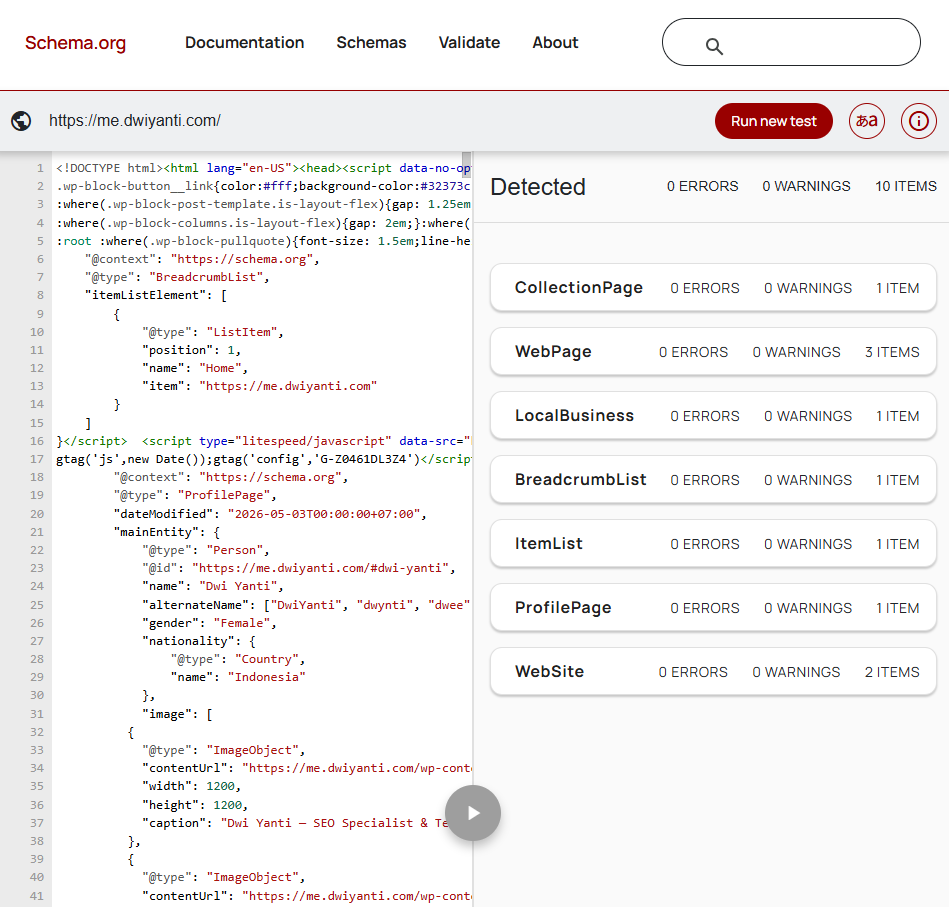
Abdul Majid 25 Urban Residence
Rebuilt from a slow page-builder site to a custom WordPress theme. Indexed and ranking Page 1 within 6 hours. Climbed to Position #1. International tenants now arrive from South Korea, Japan, France, and Singapore.
Kebuli Buchairoh
Designed, copywritten, and SEO-optimised from scratch. After owner edits disrupted ranking (Page 5+), restored to Page 1 on both Google and Bing.
dwiyanti.com Portfolio
Engineered clean breadcrumb logic, custom canonical rules, and SEO-friendly permalink structures for a dual-taxonomy system. “Dwi Yanti SEO Specialist” now dominates nearly a full page of results.
Explore more SEO work:
→ SEO Case Studies
→ SEO Strategy Framework
→ SEO Specialist Services
→ SEO Portfolio
Self-taught.
Battle-tested.
Economics Graduate
Started with a Bachelor’s in Business Management. Career spanned finance, taxation, tender documentation, and marketing administration.
First Website — Breaking Templates
Wanted a personal website. Templates never matched the vision. Started reading the code behind them — no prior programming background whatsoever.
HTML, CSS from Scratch
Taught myself through W3Schools. Moved from Dreamweaver to Muse to Notepad++ to Visual Studio Code. Built functional websites without ever attending a coding class.
Discovering SEO the Hard Way
Built websites that didn’t appear in Google. Discovered Search Console, learned indexing, took LinkedIn Learning courses — then abandoned theory for real experiments across Blogger and WordPress.
Now — Technical SEO Strategist
Combining coding skills with deep SEO knowledge to deliver results that plugins cannot match. Available as a professional SEO specialist for hire.
“When the designs didn’t match my expectations, I started exploring the code behind them. That curiosity became my career.”
Unlike consultants who rely on plugin stacks, every solution I deliver is written in code I understand completely. That means faster diagnosis, cleaner fixes, and SEO gains that don’t break when plugins update. Explore my SEO strategy, CMS management system, or full case studies.
Tools I Use
- Google Search Console
- Ahrefs
- Semrush
- Schema Validator
- Redirect Checker
- GA4 Analytics
- VS Code
- WordPress Core
Technical SEO Questions
business owners ask most
What is technical SEO?
Technical SEO focuses on optimizing the infrastructure of a website so search engines can crawl, index, and understand it efficiently. This includes website architecture, page speed, canonical tags, structured data, and crawl optimization.
Why is technical SEO important?
Even great content cannot rank if search engines cannot properly crawl or index a website. Technical SEO ensures that your content is discoverable, accessible, and correctly interpreted by search engines.
What does a technical SEO audit include?
A technical SEO audit reviews crawl paths, indexing status, site architecture, internal linking, canonical rules, schema markup, page speed, and other signals that affect search visibility.
Do I need SEO plugins for technical SEO?
Not always. Many technical SEO improvements can be implemented directly in the website code, which often results in cleaner markup and better performance compared to plugin-heavy setups.
How long does technical SEO take to work?
Some improvements such as indexing fixes can produce results quickly once Google recrawls the site. Other improvements, such as architecture changes, may take several weeks to fully impact rankings.
Can technical SEO improve existing rankings?
Yes. Fixing crawl errors, improving internal linking, and optimizing page structure often strengthens ranking signals and allows search engines to better evaluate content quality.
Your site deserves to be
found, indexed, and ranked.
Whether you’re dealing with crawl issues, canonical problems, slow indexing, or a site that simply doesn’t rank — I can diagnose and fix it at the code level. Hire a technical SEO specialist who codes.
Start a Conversation